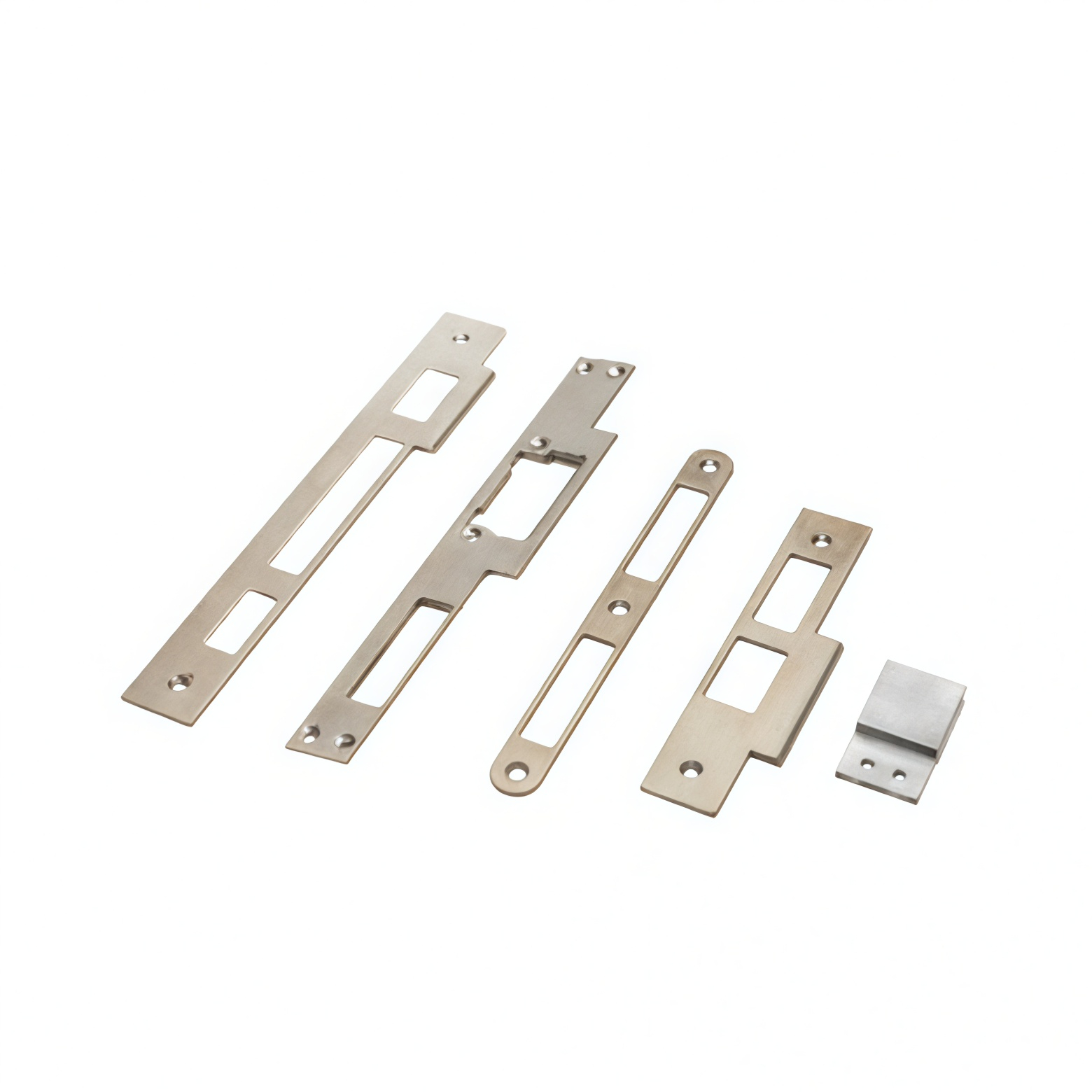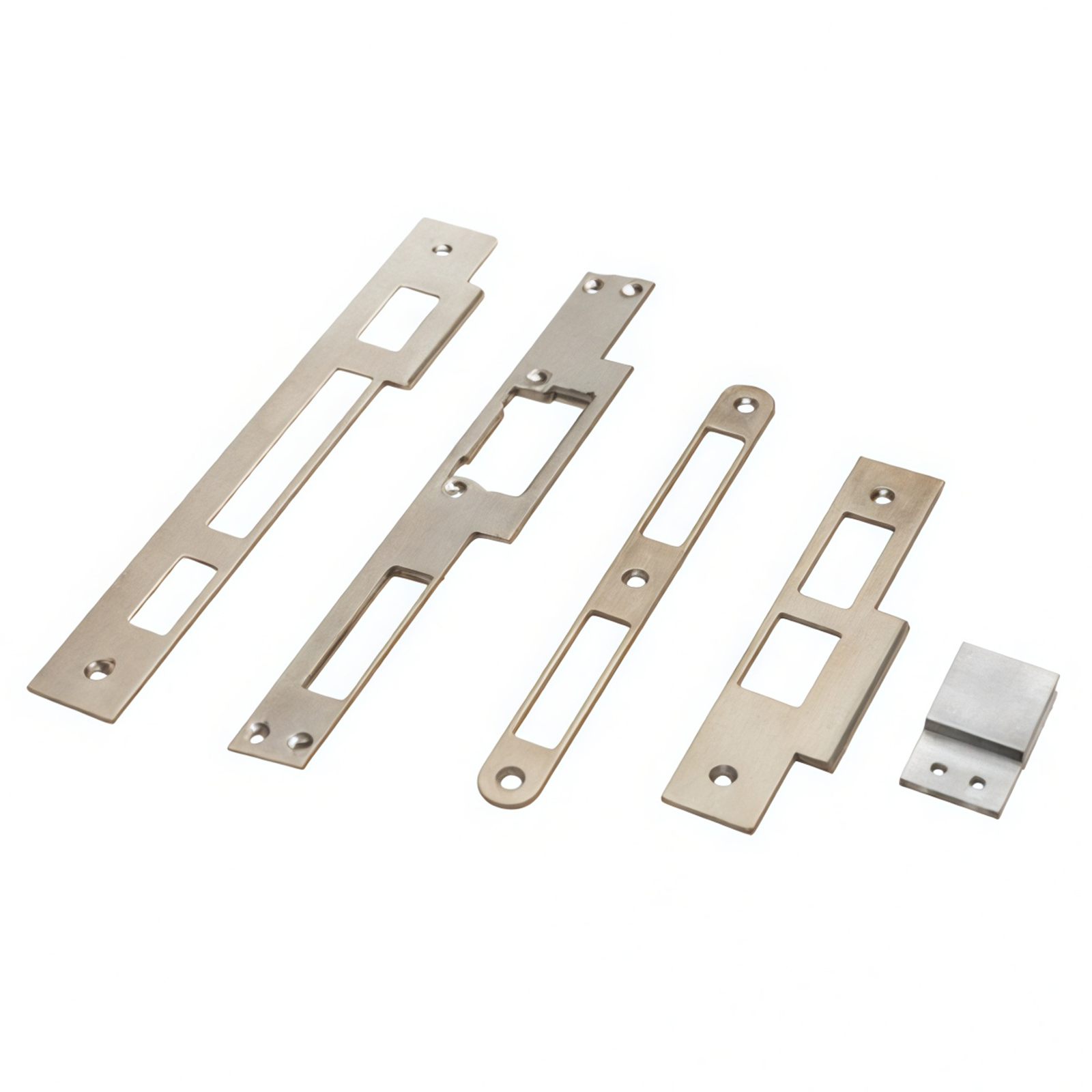
lock plate
lock plate
304 stainless steel
Stainless steel locking plate is the core load-bearing component in door lock systems, also known as locking plate or locking tongue stopper. It is mainly installed on the door frame and precisely matches with the locking tongue of the door lock, playing a role in locking the door body and transmitting force. It is widely used in various types of door bodies such as entrance doors, indoor doors, fire doors, industrial doors, etc. The material is mainly made of 304 stainless steel, and 316 stainless steel can be selected for special corrosive environments. It has a locking positioning function. When the door lock is closed, the lock tongue pops out and is embedded in the reserved slot of the lock plate. The lock tongue is fixed by the limiting effect of the slot, thus achieving a tight lock between the door body and the door frame, preventing the door body from being easily pushed open. Different types of lock plate slots have different designs, which can adapt to various lock tongue forms such as single tongue locks, double tongue locks, and sky and earth locks, ensuring precise locking. When the door is closed or subjected to external impact, the lock plate will receive the pushing force of the lock tongue and the external impact force, and evenly transmit the force to the door frame, avoiding direct impact of the lock tongue on the door frame and causing local deformation or damage. Some lock plates will be equipped with rubber buffer pads at the card slot, which can reduce the collision noise when closing the door, and also reduce the rigid wear of the lock tongue and lock plate, extending the service life of both. Stainless steel lock plates have high hardness and strong deformation resistance, which can effectively resist the damage to the lock tongue during violent door prying - preventing thieves from breaking in by prying the lock tongue or bending the lock plate